
Meet Valinho Antonio
Written by Carly Park
PhD student Valinho Antonio, of Pemba, Mozambique, joins the University of Maryland from th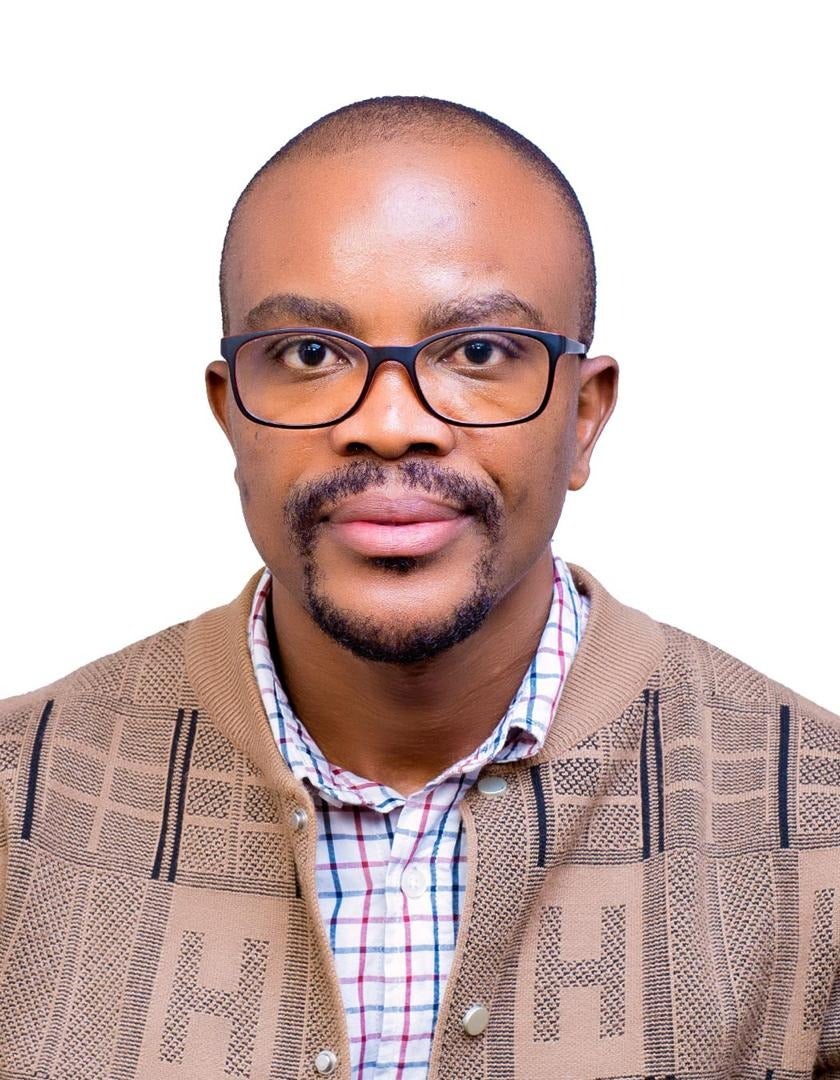 e University of Rwanda with the support of a sandwich program known as the Partnership for Skills in Applied Sciences, Engineering & Technology (PASET). Through this program, Valinho was able to apply for the Regional Scholarship and Innovation Fund (Rsif). He chose UMD and the Department of Geographical Sciences to help support his goals to conduct research in “the intersection of machine learning (ML) and remote sensing for crop-type classification and yield estimation.” His strong desire to be placed at UMD was all thanks to a workshop hosted by Dr. Hannah Kerner on Machine Learning for Remote Sensing in Kigali, Rwanda. Ultimately, Dr. Kerner suggested placement with Dr. Catherine Nakalembe, who had helped support his interest in exchange for over two years before he finally made it to the states.
Valinho’s passion for agricultural sciences started during his master’s degree, where he started analyzing crop production data from southern Brazil. “That experience made me realize the importance of developing approaches that can help address agricultural data gaps in countries like Mozambique.” Now placed at UMD, Valinho has the opportunity to further his knowledge to “to develop the technical and research skills needed to address the agricultural statistics gap in sub-Saharan Africa (SSA).” Here at Maryland, he is being given the skills he needs that “[bring] me closer to my long-term goal [of] contributing to reliable and scalable approaches for generating crop production information in SSA.”
Partnerships between UMD and organizations like PASET are what allow researchers to use the most up-to-date equipment and research data available to better their methodology and understanding. According to Valinho, he “was particularly attracted by the focus of the program on strengthening scientific and technological capacity building in SSA and by the opportunity to pursue research with direct relevance to African challenges.”
But it’s important for the UMD community to remember that opportunities presented by our campus have such a broader impact on individuals like Valinho. Being placed at an R1 research university means scholars can now access resources they may have never seen beforehand. He cites not one but two conferences that became accessible thanks to UMD: XXV ISPSR Congress in Toronto, Canada [and] IGARSS 2026 in Washington D.C., both of which are internationally recognized in the field of remote sensing.
Despite all the support UMD has provided, transitioning from Mozambique to Maryland can be quite shocking when you’ve never experienced winter before! Luckily, Valinho had already built a repertoire with his supervisor, Dr. Nakalembe, who connected him with the appropriate people on campus. For incoming scholars, he has a piece of advice: “stay connected with your [supervisor] months before your J-1 stay. That communication can make your transition much easier. And when you arrive, be ready for an environment that moves at the speed of light!”