An immersive, transformative exploration into the intersection of global health, disability rights, and cultural competence.
Terms Offered
Winter 2027
Register on Testudo
Course Details
Join us for an immersive, transformative exploration into the intersection of global health, disability rights, and cultural competence. In this dynamic 3-credit winter course, students will examine the social, cultural, and economic factors that shape public perception, stigma, and discrimination facing individuals with disabilities in Ghana. Through a hands-on hybrid learning model—combining theoretical foundations, interactive virtual fieldwork, and direct collaboration with international partners—you will design actionable, culturally responsive public health interventions aimed at reducing stigma, amplifying community voices, and driving social change. Expand your global perspective, sharpen your applied advocacy skills, and learn how to make a tangible impact on health equity from anywhere in the world.
Why Take This Course?
Disability advocacy and public health interventions cannot succeed without deep cultural humility and context. This Global Classroom connects UMD students directly to the cultural, social, and policy landscape of Ghana. You won't just learn about health disparities; you will actively collaborate with international partners and community stakeholders to address them.
Key Experiential Elements
Virtual Fieldwork: Engage in interactive digital fieldwork sessions with advocates and professionals in Ghana.
Applied Capstone Modules: Work in interdisciplinary teams to design culturally grounded public health toolkit items (case studies, quick guides, or interactive educational tools).
Cross-Cultural Dialogue: Participate in structured virtual exchange to build global leadership and cross-cultural communication skills.
What You Will Learn (Learning Outcomes)
Cultural Competence & Knowledge: Analyze how historical, spiritual, and social beliefs influence attitudes toward disability across diverse Ghanaian communities.
Applied Public Health Skills: Design and evaluate evidence-based, culturally responsive interventions that challenge stigma and promote accessibility in education, healthcare, and employment.
Global Collaboration: Leverage digital technologies to conduct virtual fieldwork, build international partnerships, and navigate global health ethics.
Who Should Apply?
This course is open to all passionate graduate and upper-level undergraduate students interested in: Public Health & Global Health Equity; Speech-Language Pathology & Hearing Sciences; Disability Studies & Social Work; Education, International Development, & Cultural Anthropology.
Sample Topics & Key Populations
Exploring disability models through a non-Western lens
Addressing stigma surrounding autism, stuttering, hearing loss, and physical disabilities
Media, policy, and community-led inclusion initiatives in West Africa
Ethical frameworks for international research and virtual fieldwork
Cultural Connection
Ghana
General Education Credits
None.
School/College
College of Education
Prerequisites & Restrictions
None.
Faculty Highlight
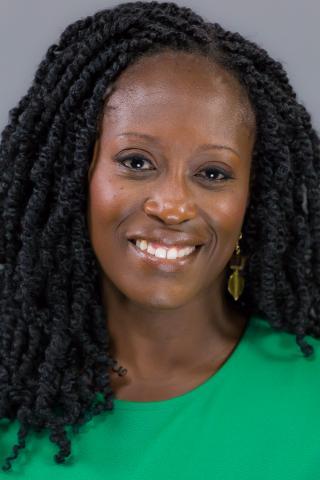
Eliza Akua Thompson
Eliza A Thompson is an Associate Clinical Professor in the Department of Hearing and Speech Sciences at the University of Maryland, College Park. She received her B.S. in Speech & Hearing Sciences from The George Washington University, her M.S. in Communication Sciences and Disorders from Howard University and an Ed.S from The George Washington University. Eliza also received a Bilingual Extension Certificate from Teacher's College, Columbia University. She is currently completing a ph.D in applied linguistics. Eliza has had a long standing interest in the processes of communication with a focus on child language development and emergent literacy intervention. As a clinician and clinical supervisor, Eliza has worked in a variety of settings including public schools, private practice and hospitals. She has also served as a clinical supervisor and therapist overseas, specifically, Ghana, Haiti and Kenya. Eliza grew up overseas in Ghana and speaks multiple languages, including Twi.
Eliza's research looks at the intersection of language, culture and disability through a public health lens. She is particularly interested in how children develop language and the various factors that impact that development; including socio-emotional, environmental, and socio-economic.
Eliza teaches Clinical Practicum, Principles and Methods in Speech-language Pathology, and Speech and Language Development in Children. Her specific clinical interests include bilingual language development, communication in cultural and linguistically populations, and language/literacy intervention.
Eliza is also founder and director of the department's premiere study abroad program, HESP-GPS. Global Perspective in Service-Learning (GPS) is a clinical training program for HESP students who seek a greater understanding of communication sciences and disorders in an international context.
Areas of Interest
- Communication in cultural and linguistic populations
- Language & Literacy Intervention
- Administration/Supervision
- Bilingual Language Development
- Counseling in Communication Sciences & Disorders
- Autism
- Language development in Children
Degrees
- Ed.S, The George Washington University
- MS, Howard University
- BS, The George Washington University
Tuition & Financial Aid
Winter Global Classrooms courses (GCW sections) are administered by Extended Studies. Please see Tuition & Fees. UMD degree-seeking undergraduate students who enrolled in course sections GCW* may be eligible for the EXST Grant. Please visit Billing and Payment to see more details under "Financial Aid". Any UMD student enrolled in course sections GCW* can apply for the need-based International Education Scholarship.
Questions & Contact Info
For more course information contact Eliza A Thompson at ethomps2@umd.edu .
For general questions, please contact the Global Classrooms team at globalclassrooms@umd.edu.