
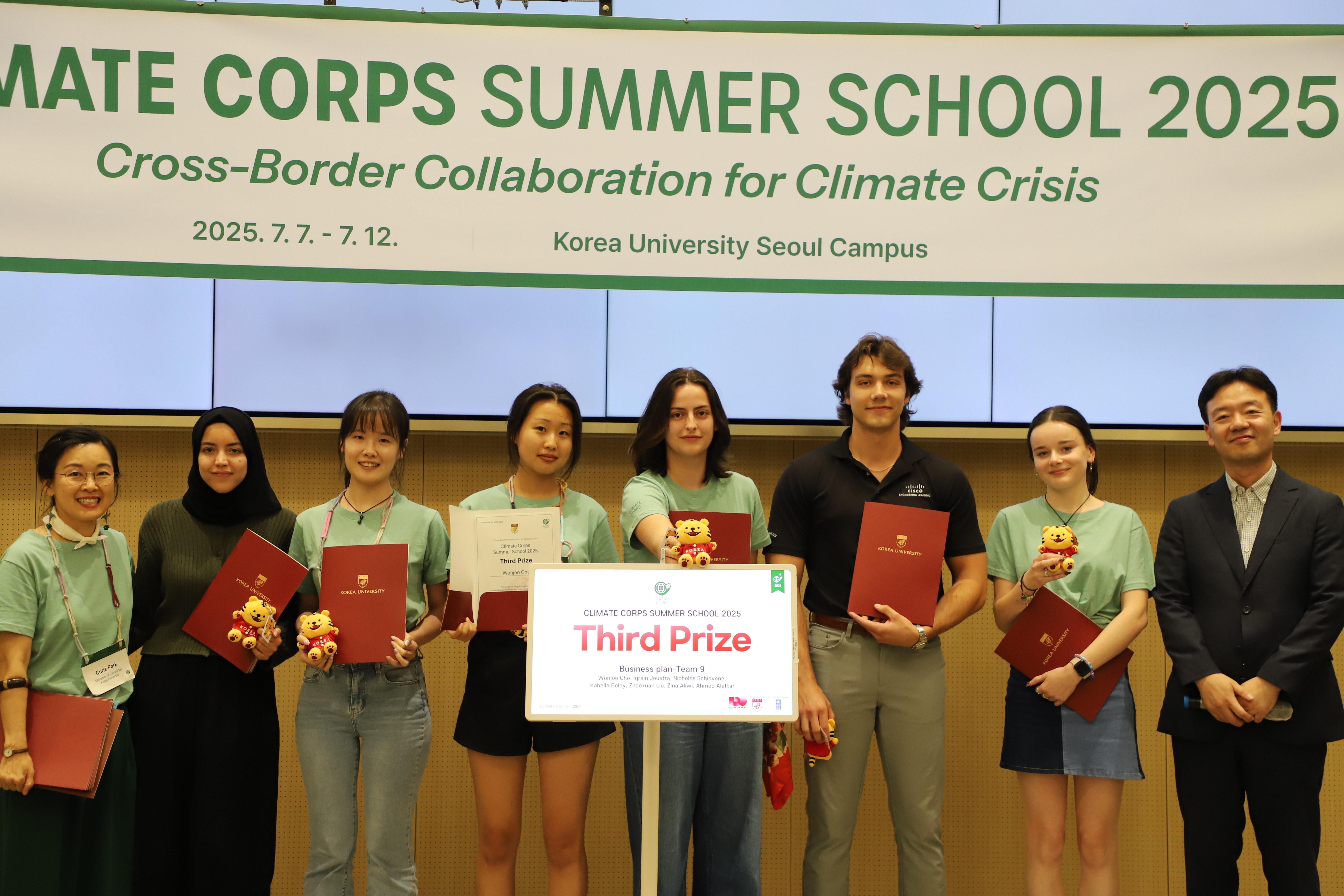
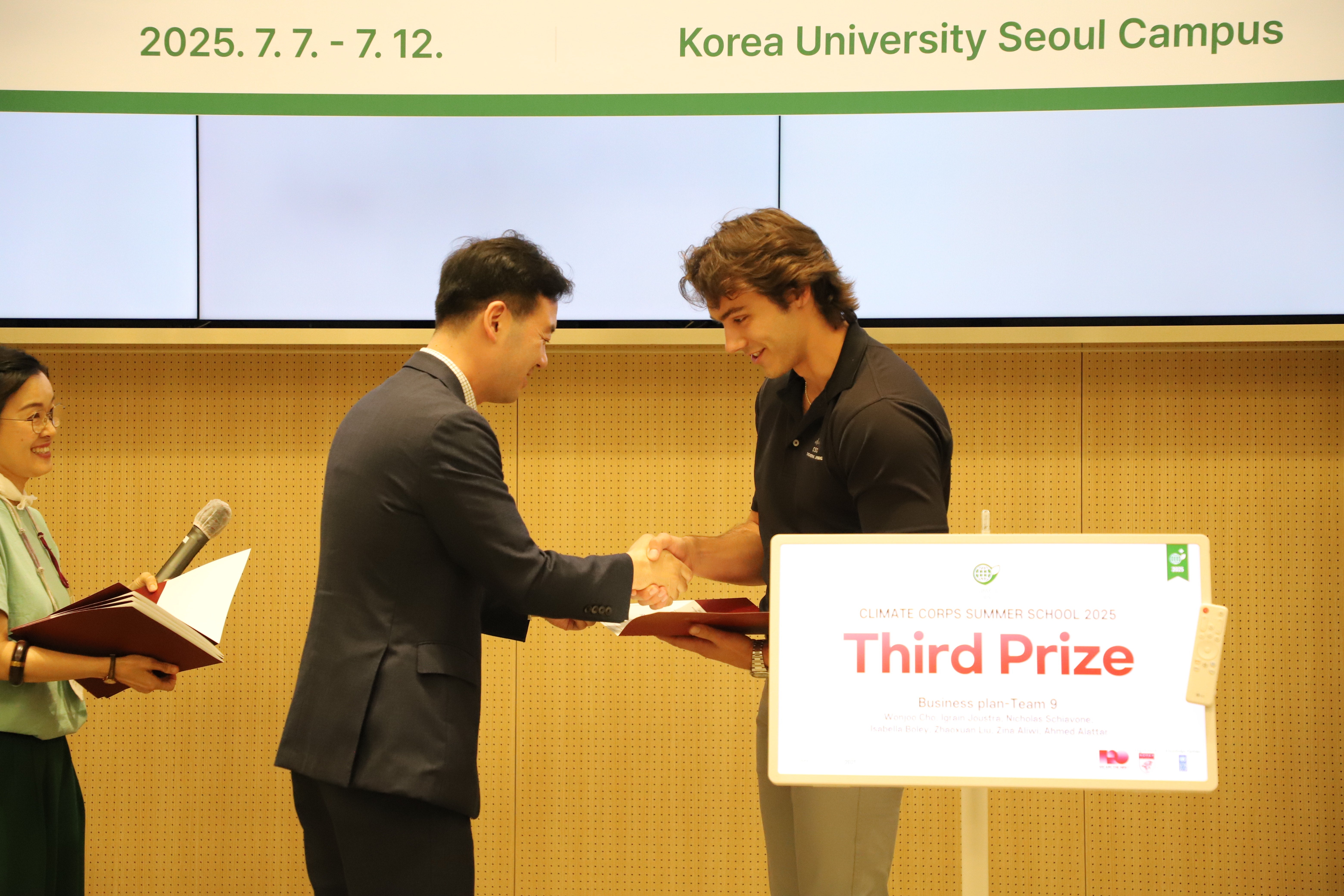
On a summer morning in Seoul, eight students gathered around a whiteboard and filled it with ideas, from legal knowledge to insight on how migration looks in their home countries. Their challenge: develop a solution to support climate refugees. By the end of the week, their brainstorming evolved into a website tool that earned their team third place in the Climate Corps competition.
Nicholas Schiavone, an Information Science major, wasn't sure how his skills would contribute to climate solutions when he applied to Korea University's Climate Corps Summer School. "I feel like Information Science is kind of a very broad degree," he said. "I could probably help out in some sort of way, and I like traveling, so I decided to apply."
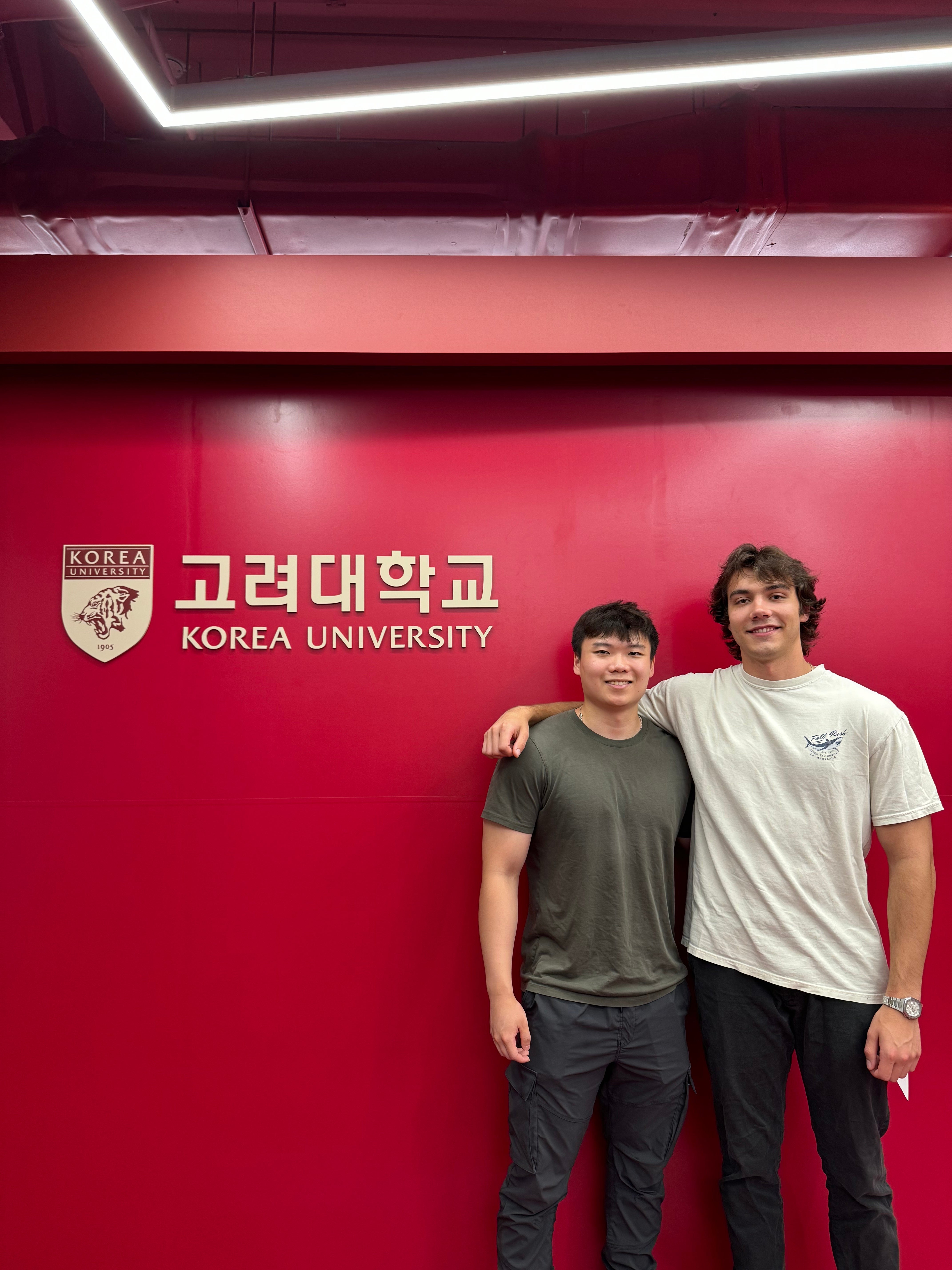
Last July, Schiavone joined 130 students from 35 universities across six continents for an intensive week tackling real-world sustainability challenges. His team of eight, including students from Switzerland, New Zealand, China and the Middle East, was tasked with developing solutions for climate refugees displaced by rising sea levels and extreme weather.
While some teammates tackled legal and policy questions, Schiavone looked for a way technology could make the process easier. "Everyone's connected somehow—by a phone, a computer, something," he explained. He suggested they build a free, publicly accessible website that lets users compare countries based on safety, immigration rules and healthcare access. Using heat maps and open-source data, the tool helps people understand climate risks and relocation options. "My teammates developed the political framework. I built the tool to make it accessible," he said.
The technical work was only part of the experience. With so many viewpoints in the room, the group had to navigate different communication styles and expectations. Some teammates spoke up fast while others stayed quiet, and not everyone approached the problem the same way. Early on, they had lively debates about immigration and how different countries handle climate issues. “We had to slow down and hear each other out,” Schiavone said. Once they did, their ideas started to come together. “It really showed me that collaboration is the key—everyone brought something different to the table."
Faculty guides and UN-affiliated mentors helped teams shape their direction during morning sessions. In the afternoons, groups spread out across Korea University to work on their projects before the final presentations at the end of the week.
Outside the classroom, Seoul itself taught unexpected lessons. Unable to speak or read Korean, Schiavone slowed down and observed. He noticed the city’s strong commitment to sustainability, from organized recycling to clean streets and eco-friendly habits. Cultural moments surprised him too, like Middle Eastern teammates bringing gifts on day one as a gesture of hospitality.
His biggest takeaway? "When you go somewhere new where you can't even communicate, you inevitably feel a little lost but you inevitably find your way around. That holds true when working with groups too—you just have to be patient and listen and learn as best as you can."
For students considering the program, he offers simple advice. “Go in with an open mind and get out and explore.”
Addressing global challenges doesn't require majoring in climate science—it requires showing up with your skills, curiosity and willingness to collaborate across borders.
Applications for Climate Corps Summer School 2026 are open through February 24, 2026.
Learn more and apply