Jillian Mikutsky
Program: Indonesia: Social-Ecological Systems, Environmental Policy, and Sustainable Development
Term: Winter 2026
Major: BA/MPP Bachelor's/Master of Public Policy Program
When I committed to the Indonesian study abroad program, I started learning Indonesian and I’m so glad I put in the effort to learn and use some of the language. Even though I was a beginner, I had several fun experiences speaking with our hosts and guides, local government leaders, store clerks, cab drivers, servers, and random people as we explored. I unlocked a unique connection to whoever I'm interacting with that goes beyond typical tourist behavior. Understanding some of the language helped me get to know people to see a glimpse into Indonesian culture and their everyday lifestyles. Speaking Indonesian brought a mix of shock and smiles. I think they appreciated my efforts and possibly hyped up my language skills too much.
What surprised me most about Indonesia was how excited locals were to see me, a white American just walking around. I definitely stood out, and almost everywhere I went someone would smile and say “hello!”. They were all very respectful and kind, sometimes shy, but always welcoming. I am probably all over Indonesian Facebook with how many people asked to take pictures with me and others in my class. It was fun to walk around feeling like a celebrity in a wholesome and positive way.
On growing academic perspectives...
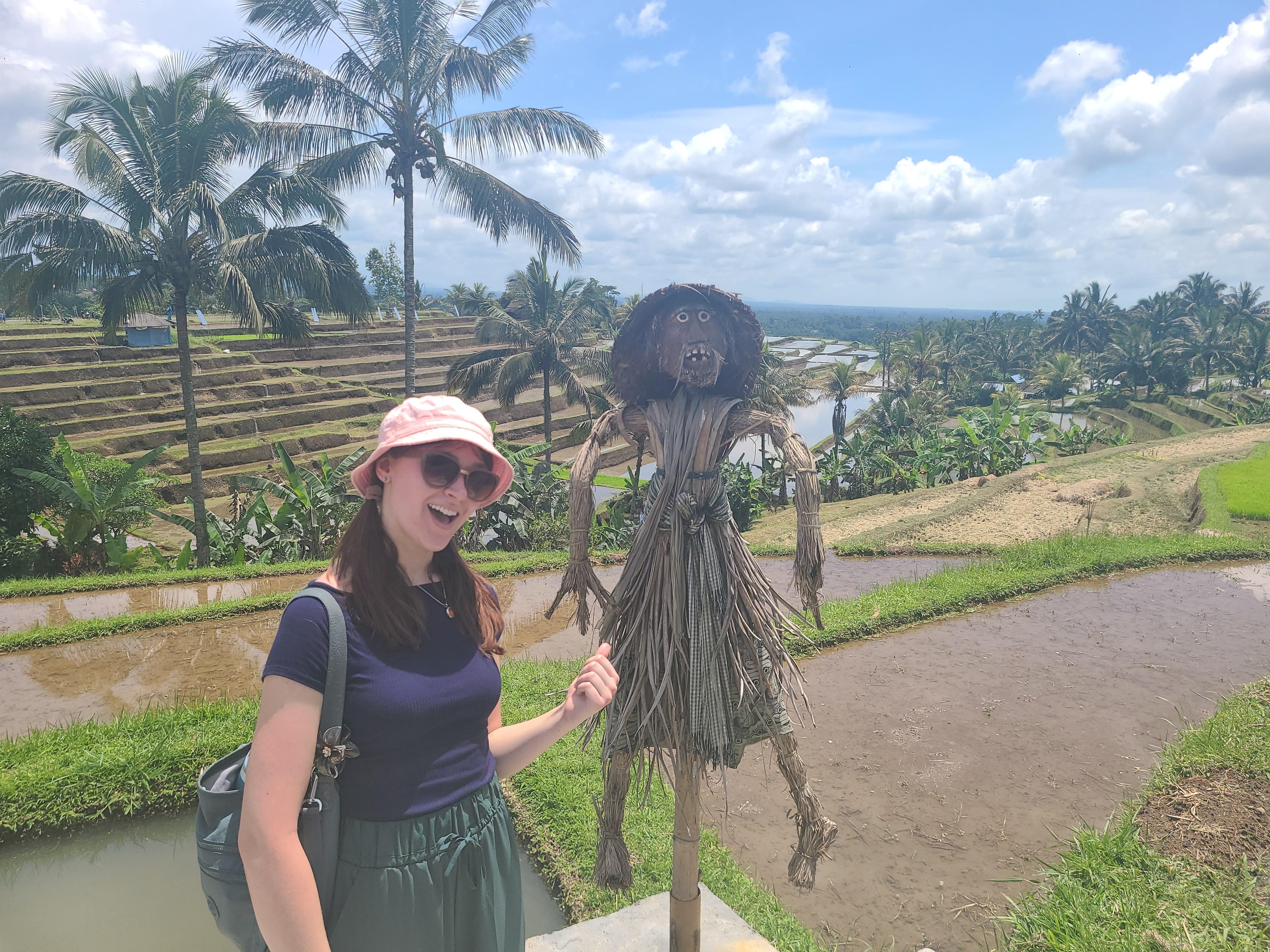
My biggest takeaway from studying abroad was the importance of the bottom-up policy making approach and decentralizing policies so they are created by local leaders and communities. Moving the power from the central government allows for unique and adaptable policies to best serve the intended population. At the individual and local level, people experience the effects of policy firsthand and have valuable experiences and ideas to improve future policy. In Bali, this was seen in the traditional subak rice irrigation systems that are over 1,000 years old. It is a sustainable, self-governed system among farmers that has survived history and is still used today. The farmers know the value of and how to maintain these systems and should be consulted by the central government to learn how to best protect the land, water, and other essential resources.
Advice for future #TerpsAbroad:
If you have dietary restrictions or food allergies, do research on local cuisine ingredients and where you can find food before you go. This will help map out safe foods and determine how accessible they are. In the country, I would recommend having a screenshot of the English and a translation in the local language describing your restrictions for when you go out to eat. It was incredibly helpful to make sure the server or whoever was preparing the food understood, even if they knew some English.
I unfortunately got sick on my trip and I overcame it by taking care of myself. I recognized that I needed to stay behind to rest. While I was sad to miss some of the class experiences, I knew pushing myself to participate would have made me feel worse and it would have taken longer for me to recover.
If I hadn’t studied abroad, I would have never had unique experiences with local Balinese culture.