
By School of Public Health Staff
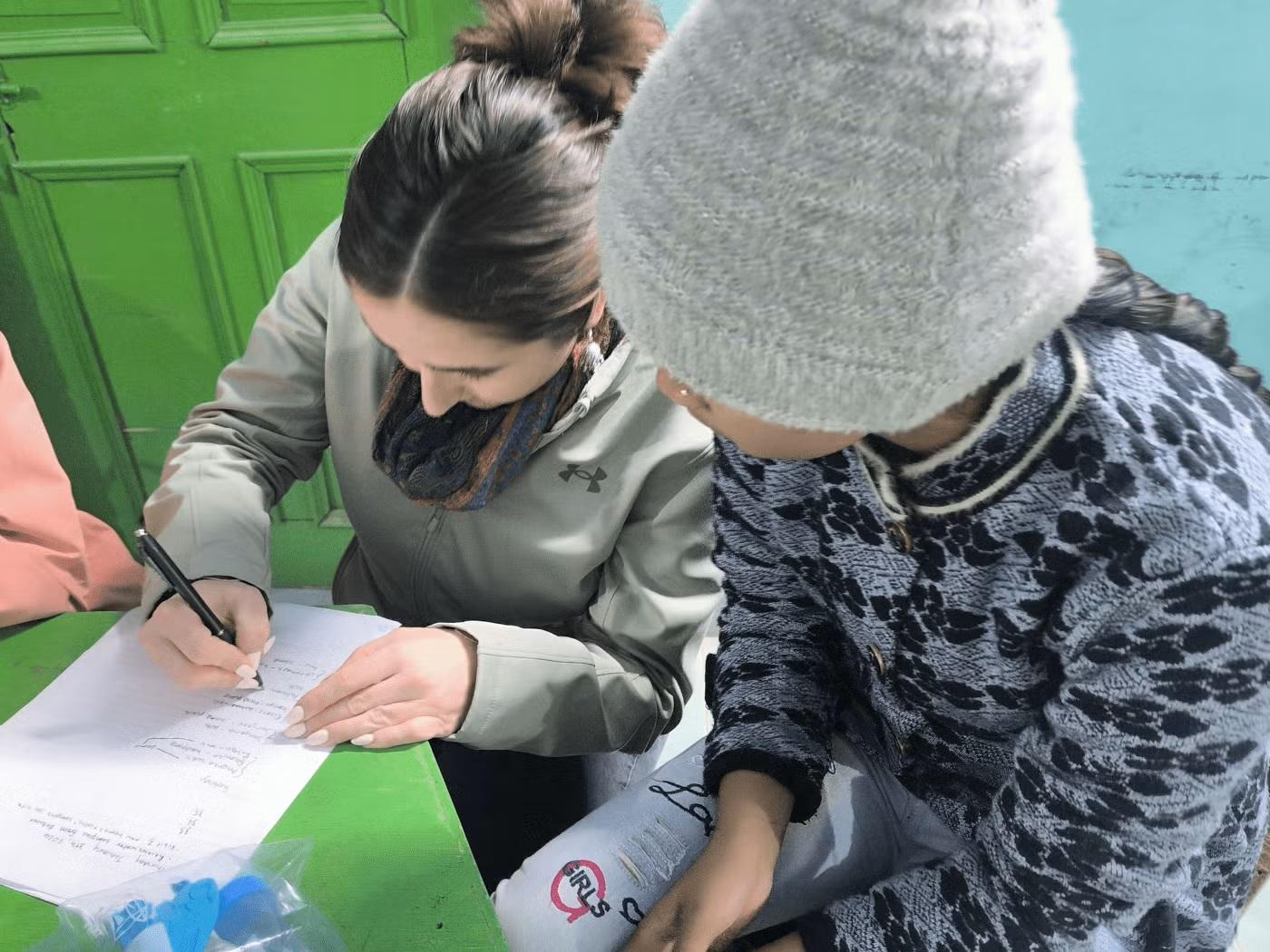
VARANASI, India – Outside the ancient city of Varanasi in northern India, UMD undergraduate Zoe Baber ‘27 co-leads a workshop with middle school students at the Vidyashram-South Point School on a book they created telling the story of “Esha” (or E.coli), how it spreads in water and what actions can prevent it.
This is the second time Baber, from Rockville Maryland, has traveled to Varanasi. True to the unique model of UMD’s Public Health Beyond Borders (PHBB) program, she is one of six undergraduate students from diverse majors – from public health to engineering – who planned and led the January trip to India.
“My first year I had the help of my co-leader, Adriana, who had traveled the year before,” said Baber. “One student is more senior and already has experience traveling and planning, which really helped me to come into my role and position to lead this year.”
The PHBB approach is rooted in one the oldest human learning methods – mentoring.
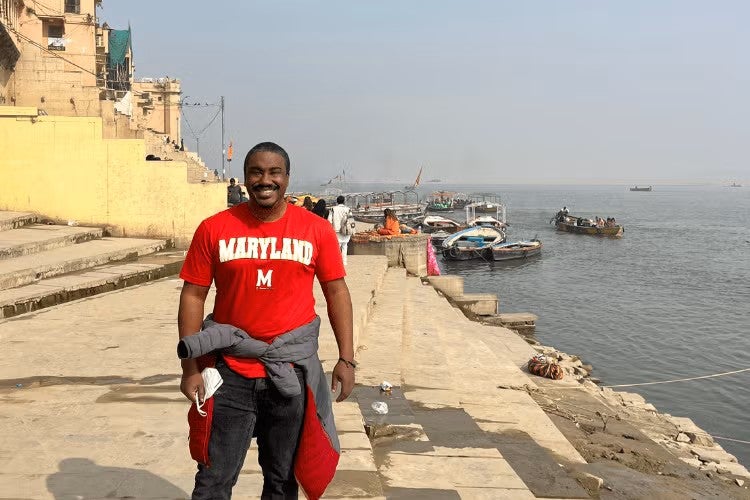 “As students organize the research and travel experience, they practice and hone their leadership skills outside of the traditional classroom environment,” said Maurice Rocque, director of administrative services for SPH’s Department of Global, Environmental and Occupational Health and a staff mentor on the trip.
The purpose of this model, he says, is to support student experiential research, learning and growth. For Rocque, the learning went both ways.
“I had to trust the students and also support them in an unfamiliar, international setting, which required flexibility and empathy,” he said. “I really gained a deeper appreciation of the diverse needs and perspectives they bring.”
For the two graduate student mentors on the trip, Claire Barlow and Kathryn Dixon, PHBB was all about building relationships.
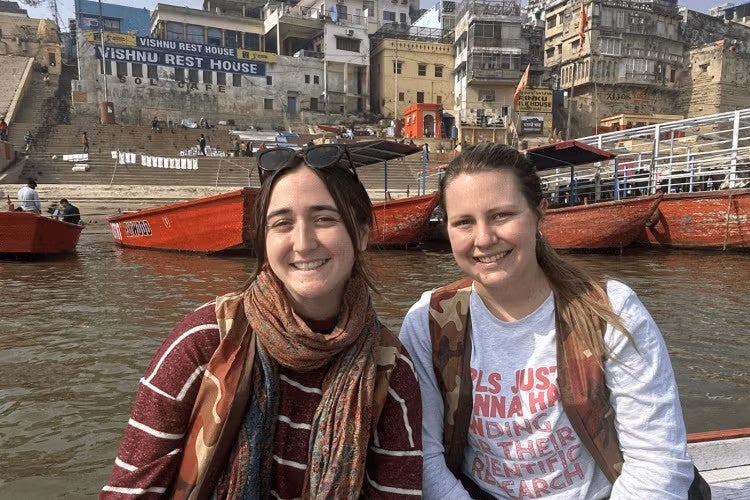 As they oversaw the “Story of Esha” E.coli workshops at South Point School and guided undergraduates on research planning, they also used funds from a Global Health Initiative seed award to test water for E.coli in community homes around the school.
Barlow and Dixon decided to teach the South Point School students how to collect water samples, involving them directly as young citizen scientists in the research assessing the water in their homes.
Ahead of the trip, Barlow sent a cold email to a microbiology professor at Banaras Hindu University (BHU) about collaborating on their water sampling project. Dr. Tuhina Banerjee replied and another relationship began. UMD students worked side by side with BHU students in Banerjee’s microbiology lab as they processed water samples collected from communities around the Vidyashram–South Point School.
Rahul Yadav, the school’s science and math teacher, has worked with the PHBB program for two years. He says the opportunity for him and his students to work with UMD students and researchers opens minds.
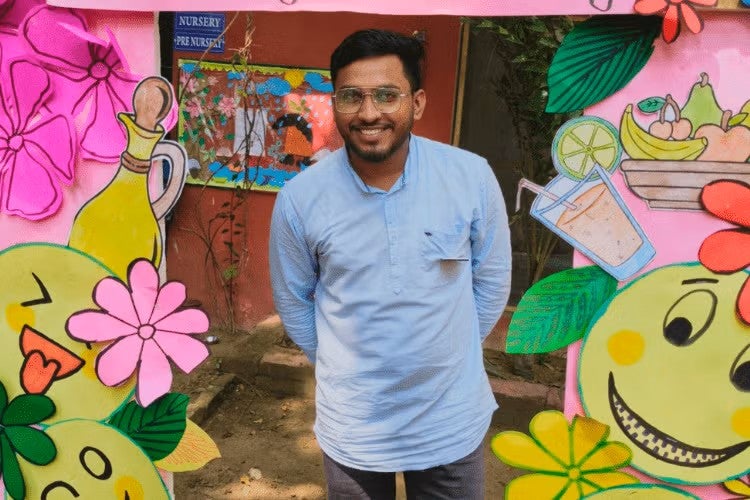 “I’m very interested in research on water in particular, it’s the main source of living things. As a child I knew that water pollution means only plastic, garbage in water but our school children are learning directly about their own water with UMD students,” said Yadav.
Yadav supports the UMD group in multiple ways, including helping with translation and facilitating water testing in the community.
“I’m a local, so parents and community members know me,” said Yadav. “I helped the team share the water test results and educate families about filtering and boiling water in order to stay healthy.”
For Barlow and Dixon, sharing results directly with families was a new experience and an emotional one.
“We know water quality is important and it’s a global issue. But being in people’s homes sharing results directly brought us out of the lab and into real life. We care about these people,” said Dixon. “The emotion is good – it means we have a vested interest in this work and don’t want to just grab samples and go.”
The PHBB program was started in 2013 by SPH students together with SPH Dean at the time, Jane Clark. Professors Dr. Elisabeth Maring and Dr. Dina Borzekowski were involved early on, with the India program growing out of Maring’s experience as a Fulbright Fellow in Varanasi in the early-2000s.
Maring is constantly thinking of ways to expand the student experience. “After debriefing with students, we plan to include some Hindi language immersion on the next trip,” she said. The school is very excited about helping our students grasp at least some greetings and basics – it goes a long way.”
As relationships continue to deepen across cultures and generations, the impact of PHBB’s mentoring model ripples out in many directions. For Baber, who is pre-med, being a part of PHBB has clarified how public health fits into her career.
“The program has inspired me to consider preventative medicine as much as direct medicine,” said Baber. “Now I can't imagine practicing medicine without looking at it from a public health angle.”
This article was originally published on the School of Public Health website.