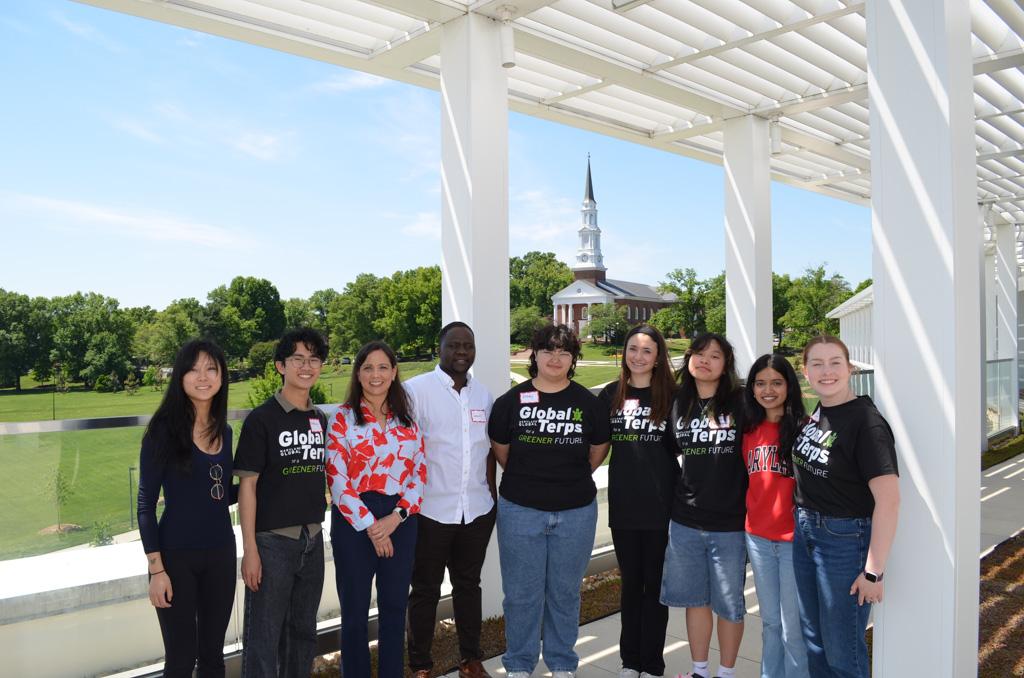
What happens when sustainability becomes a shared language across cultures? At the University of Maryland, the Global Terps for a Greener Future (GTGF) initiative is showing how environmental action can also build connection, belonging and community across differences.
Led by International Student & Scholar Services (ISSS), GTGF was a co-curricular initiative that brought international and domestic students together this academic year to collaborate on sustainability-focused projects. Supported by a grant from the Sustainability Fund Office, the program was designed as a pilot to explore how shared work around environmental and social sustainability can help students connect in meaningful ways.
“The idea was to have a space on campus where international students can meet with their domestic peers to work together, collaborate, and connect through shared interests,” said Dr. Rebeca Moreno, assistant director of engagement and inclusion programming with ISSS. “And the shared interest here is environmental sustainability and social sustainability. How do we make things work better, not only locally, but globally?”
The initiative launched with a project-based internship model, pairing one international student and one domestic student each semester. Working together across the summer, fall and spring terms, these teams tackled projects ranging from research to educational outreach.
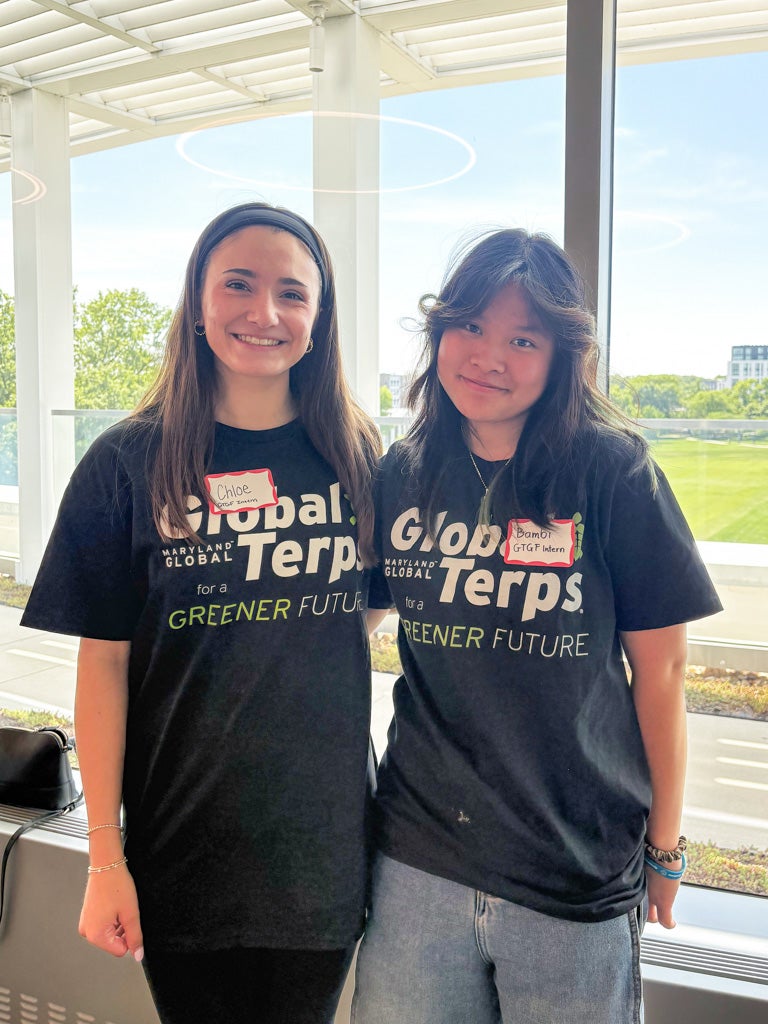
For Chloe Gaines ‘27, a domestic student studying environmental science and policy, that collaboration offered a new vantage point. When speaking about her fellow intern for the spring semester she said, “I enjoyed learning about Bambi’s culture, perspective, and lifestyle on a personal level. My own understandings are very limited to my past, growing up and going to school in Maryland throughout my whole life.”
The appreciation for how cross-cultural collaboration shaped their work together was mutual for Truc Quan “Bambi” Dao ‘29, a Vietnamese student studying environmental science and technology.
“Working with someone from a different background was really valuable because it brought in perspectives I wouldn’t have considered on my own,” Dao said. “We sometimes approached problems differently, which helped me to be more open-minded and intentional about listening.”
One of the interns’ first projects focused on a challenge many students may not immediately notice: sustainability practices are not universal. Moreno said the team quickly realized that UMD’s approach to waste sorting and recycling can be unfamiliar to students arriving from other countries.
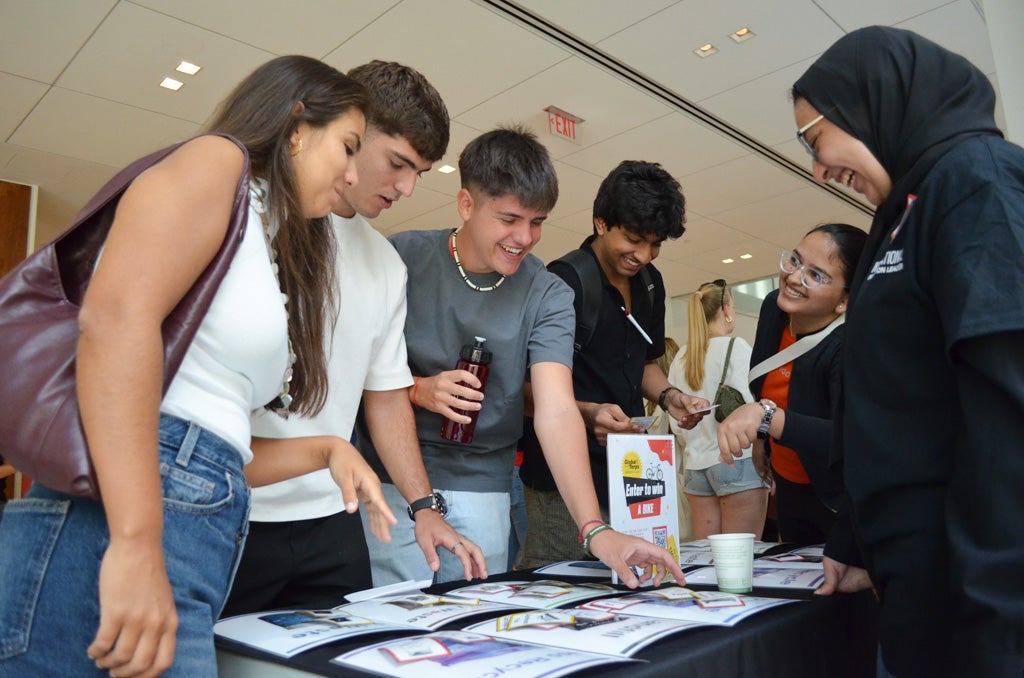
In response, interns created educational tools for International Student Orientation, including interactive games that teach waste sorting and highlight the environmental impact of everyday choices.
“I’m most proud of the game because it was interactive and let us directly engage students in thinking about their impact in a fun, memorable way,” Dao said.
Beyond educational outreach, interns also researched UMD’s sustainability efforts and helped launch the Global Terps for a Greener Future Collective, a student organization that now brings together undergraduate and graduate students to explore sustainability issues on campus and beyond.
For Gaines, branching out from project work into community-building was especially meaningful.
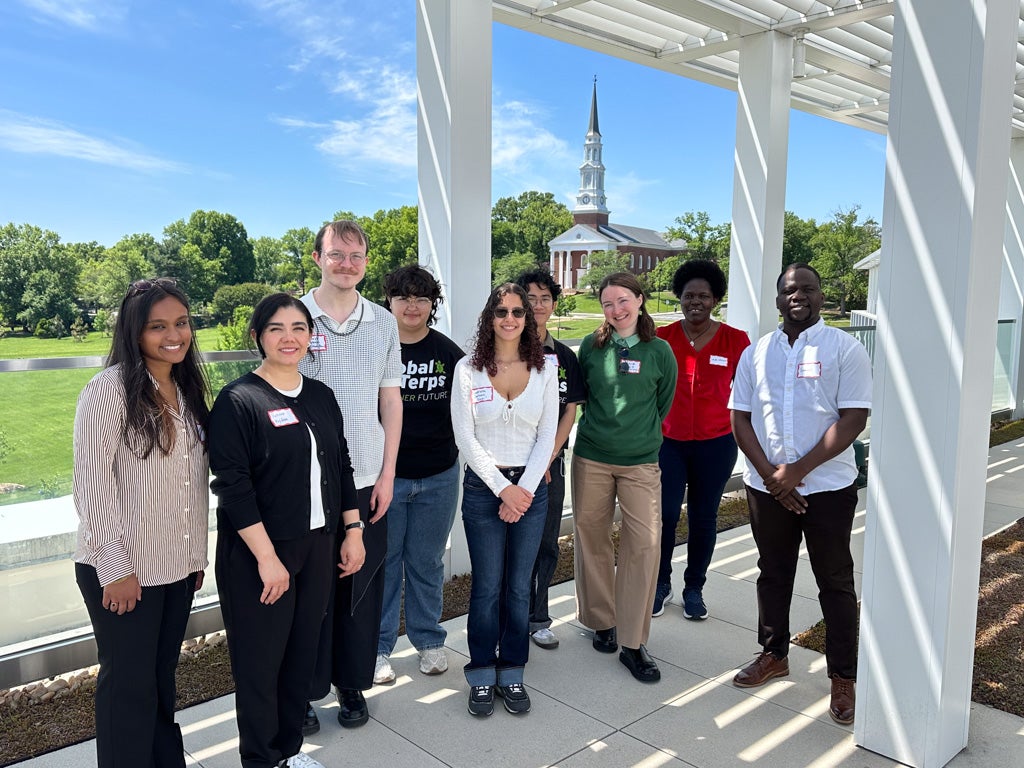
“Working with the GTGF Collective allowed me to connect with students from across the world to learn what sustainability means to them,” she said. “They have broadened my cultural understanding and inspired me to explore more on my own.”
Through that work, students say they developed a deeper connection to both the university and each other. “I am proud to be a part of a campus community that is working in so many ways to aid our environment,” Gaines said.
The program has also strengthened students’ sense of belonging. “Being part of a team that’s working toward a shared goal made me feel more connected,” Dao said. Gaines echoed that sentiment, adding, “Leaving the internship, I am now part of a new community.”
That sense of shared purpose was on display at the Global Terps for a Greener Future Spring Fair in early May, where students from various disciplines across campus presented research and creative projects on topics ranging from the impactful engineering projects and the ecological footprint of AI, to talent retention for more sustainable cities and creative works of art inspired by nature and sustainability.
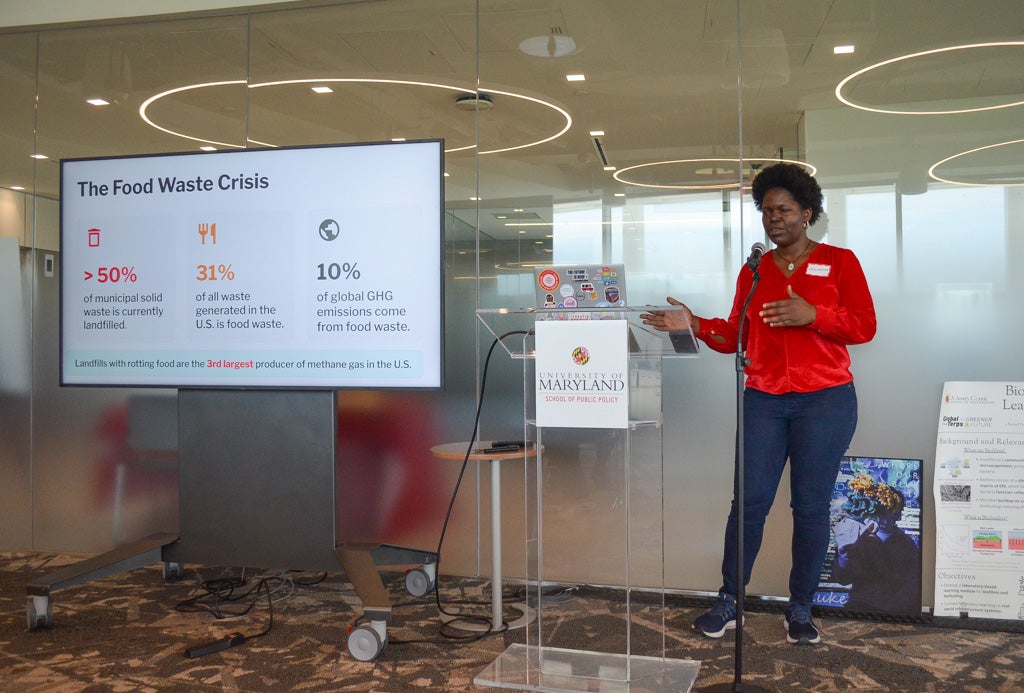
The award for outstanding project went to Maureen Norah Nabulime, a Ph.D. candidate from Uganda studying environmental science and technology for her project “Recovering Bioenergy From Municipal Solid Waste (MSW).”
For Dr. Moreno, the impact of the initiative goes beyond any single project or event.
“I have to say, I was surprised by the students' reaction to it. They are very engaged, very involved,” she said. “There is a sense of ‘we have this shared humanity, and we have this shared responsibility to take care of each other.’”
As the initiative moves into its second year, that sense of connection continues to drive its growth. What began as a pilot program is now a model for how global challenges like sustainability can bring students together in meaningful ways.
“The fair, and this initiative in general, is about connecting with each other across differences in service of a shared goal that affects us all,” Moreno said.